Night Sweats During Your Period and Perimenopause: Causes and What Helps
Night sweats before or during your period are more common than you'd think, and they can also be an early sign of perimenopause. Here's what's actually happening in your body, and what can help.

January 13, 2025 - Updated June 2, 2026
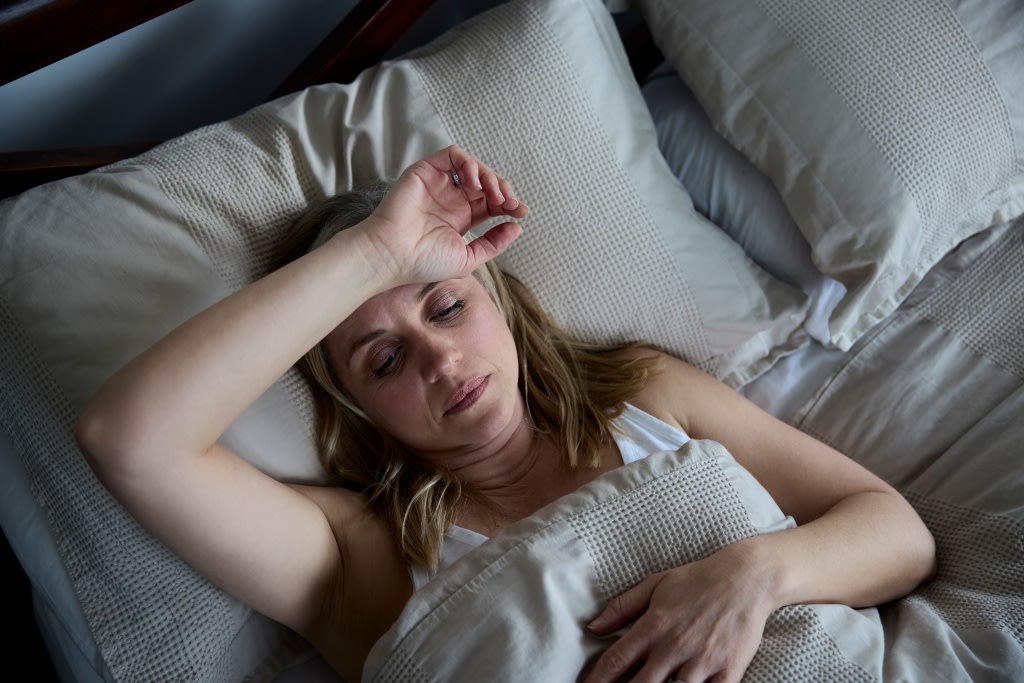
There are times when you expect to get sweaty. During a particularly intense workout or a hot yoga class. If you're someone that loves to recharge and recover in the sauna. When you're at the beach on a particularly warm day. When you're feeling struck down with a fever. But waking up in the middle of the night feeling drenched from head to toe? Well, that's not always something you can plan for. And unfortunately for us women, we're impacted by night sweats at a much higher frequency than men.
We know that night sweats and hot flushes are among the most recognised perimenopause symptoms, but what if you're experiencing them regularly and you're not at that stage of life yet? Could your period be causing it? And more importantly, can anything be done about it?
What are night sweats and hot flashes?
First things first, you might be wondering what exactly night sweats and hot flashes are. While sweating is your body's unique way of cooling itself down and keeping your body at a comfortable and safe temperature, night sweats and hot flashes are typically anything but comfortable.
According to the Cleveland Clinic, night sweats are when you sweat enough to soak through your clothes and bedding and disturb your sleep. As the NHS highlights, it's normal to get sweaty if your environment or bedding are too warm, but night sweats can occur even when there are no environmental factors at play, with the most common causes including menopause, anxiety, alcohol or drug use, low blood sugar, some medications and a condition called hyperhidrosis.
Hot flashes tend to come on quickly and last anywhere between one and five minutes, according to Harvard Health. They say that although the physiology has been extensively studied, no one is certain why or how they occur beyond hormonal changes.
What are night sweats and hot flashes?
First things first, you might be wondering what exactly night sweats and hot flashes are. While sweating is your body’s unique way of cooling itself down and keeping your body at a comfortable and safe temperature, night sweats and hot flashes are typically anything but comfortable.
According to the Cleveland Clinic, night sweats are when you sweat enough to soak through your clothes and bedding and disturb your sleep. As the NHS highlights, it’s normal to get sweaty if your environment or bedding are too warm, but night sweats can occur even when there are no environmental factors at play, with the most common causes including menopause, anxiety, alcohol or drug use, low blood sugar, some medications and a condition called hyperhidrosis.
Hot flashes tend to come on quickly and last anywhere between one and five minutes, according to Harvard Health. They say that although the physiology has been extensively studied, no one is certain why or how they occur beyond hormonal changes.

Night sweats and your period
While we know some of the more common reasons for night sweats, most healthcare providers are quick to acknowledge that sometimes the cause is unknown while anecdotal and scientific evidence both suggests that for some women, the menstrual cycle plays a part. Even if you're not sweating, you may find that hormonal fluctuations throughout your cycle can impact your sleep quality.
A 1993 study explored the occurrence of night sweats and hot flashes similar to those experienced during menopause in women aged 18 to 45. To add an extra layer to their findings, the researchers - who all specialised in obstetrics and gynaecology - included three distinct groups of subjects. Women with confirmed premenstrual syndrome (PMS), women with chronic cycle-related symptoms and women without cycle-related symptoms.
Across each group, episodes of chills and sweats closely mirrored where the women were in their menstrual cycle, occurring most commonly during their periods, with no statistically significant differences across age groups.
However, those who were not impacted by cycle-related symptoms were least likely to experience sweats and chills, with only 43.1% reporting this. In contrast, 83.4% of the PMS cohort and 81.5% of the chronic cycle-related symptom group experienced at least one episode.
According to the Cleveland Clinic, the time before your period is most commonly associated with PMS and chronic cycle-related symptoms, and this is also the time when your estrogen levels decrease. Symptoms include cramping, irritability and - you guessed it - night sweats.
Night sweats during perimenopause
Perimenopause is the stage before menopause and can last anywhere between four and eight years. As menopause begins after your final period, during perimenopause you'll still have a period, but will likely find your cycle is irregular as your ovaries begin to wind down.
If you're going through perimenopause you might find night sweats and hot flushes are a common occurrence. A 2021 study published in The Journal of The Menopause Society found that in the five to 10 years before their final menstrual cycle, 20% of subjects reported hot flashes and night sweats and 40% reported trouble sleeping.
So what exactly is going on in your body during the peri years? Fluctuating hormone levels cause the part of your brain that controls your body heat (known as the hypothalamus) to run into some difficulty regulating your body's temperature. In response, your body ends up sweating too much in an effort to cool itself.
When does perimenopause start?
This is one of the most common questions we hear, and the honest answer is: it varies. Most women enter perimenopause somewhere between their late 30s and mid-40s, though some experience it earlier. The average age is around 47, with menopause itself (defined as 12 consecutive months without a period) typically arriving around 51, according to the NHS. So if you're in your late 30s and noticing changes to your cycle alongside sleep disruptions or more intense night sweats than usual, perimenopause could be a factor worth discussing with your GP.
Other perimenopause symptoms to be aware of
Night sweats don't always show up alone. Perimenopause comes with a wide range of symptoms, and they vary enormously from person to person. Some common ones alongside night sweats include irregular periods, mood changes, brain fog, joint aches, changes to libido, vaginal dryness and headaches. If several of these sound familiar, it's worth keeping a symptom diary and taking it to your doctor. The more information you can give them, the easier it is to get the right support.

How to treat night sweats
If you're going through perimenopause or have already reached menopause, hormone therapy may be an option that can help you deal with night sweats and other symptoms such as vaginal dryness.
Not yet at that stage of life? There are a number of options available if you're after a better night's sleep.
Avoid consuming caffeine, alcohol and spicy foods close to your bedtime as these can all cause a rise in body temperature and cause you to sweat
Opt for loose fitting, breathable fabrics when it comes to your pajamas and bedding to help keep you feeling cool and comfortable in bed
Cool down your bedroom with an airconditioner, fan or sleep with your window open if you can
Keep a bottle of cold water by your bed and drink plenty of water throughout the day
Can supplements help with perimenopause night sweats?
Supplements aren't a magic fix, but some have decent evidence behind them when it comes to managing perimenopause symptoms, including night sweats. A few worth knowing about:
Magnesium plays a role in regulating body temperature and sleep quality, and many women are deficient in it. A 2023 study published in Biological Trace Element Research found that magnesium supplementation reduced hot flush frequency in perimenopausal women.
Black cohosh is one of the more studied botanicals for hot flushes and night sweats. A review published in Menopause found evidence supporting its use for vasomotor symptoms, though it's not recommended for everyone, particularly those with a history of hormone-sensitive conditions.
Phytoestrogens (found in foods like soy, and available in supplement form) mimic the effect of oestrogen mildly. Some research suggests they may help reduce hot flush severity, though results across studies are mixed.
As with anything, it's always best to check with your doctor before adding a new supplement, particularly if you're on any medication.
Always listen to your body
One thing we'll always champion here at Sweat is the importance of listening to your body and seeking out help from a trusted medical professional if you feel like something's not right. If night sweats are keeping you up at night or causing you concern, don't feel afraid to reach out for help.
Amy is a writer and editor at Sweat. She has over a decade of experience in women’s publishing and digital media and has previously worked across titles including Mamamia, Grazia and Cosmopolitan.
* Disclaimer: This blog post is not intended to replace the advice of a medical professional. The above information should not be used to diagnose, treat, or prevent any disease or medical condition. Please consult your doctor before making any changes to your diet, sleep methods, daily activity, or fitness routine. Sweat assumes no responsibility for any personal injury or damage sustained by any recommendations, opinions, or advice given in this article.
Wellbeing